1958 · THE LAB
Tennis on an oscilloscope
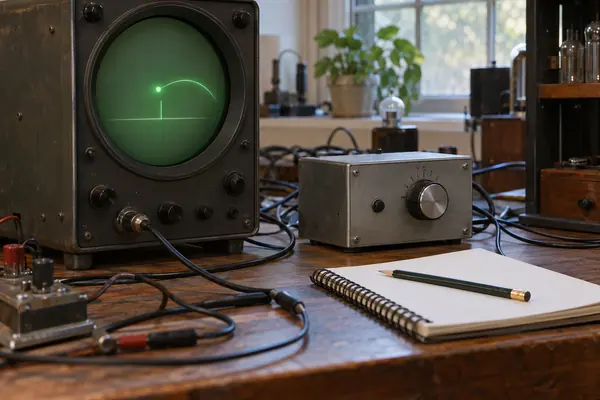
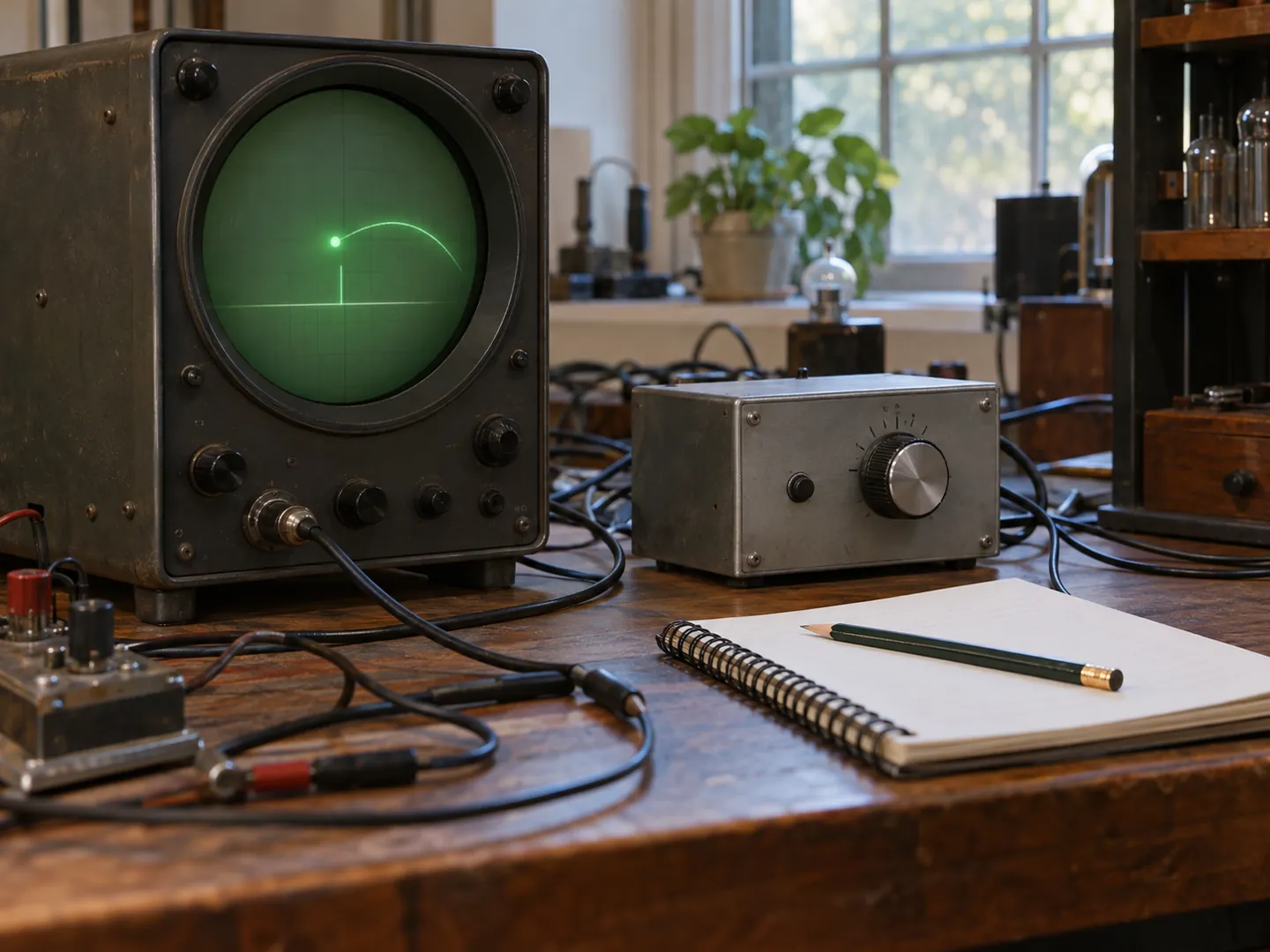
Brookhaven National Laboratory showed a side-on tennis court on a five-inch screen at its visitors' day. Hundreds of people lined up to play.
Meet the machines doodlepong.
A SHORT HISTORY OF TV TABLE TENNIS
Before games came on cartridges, they came as table tennis.
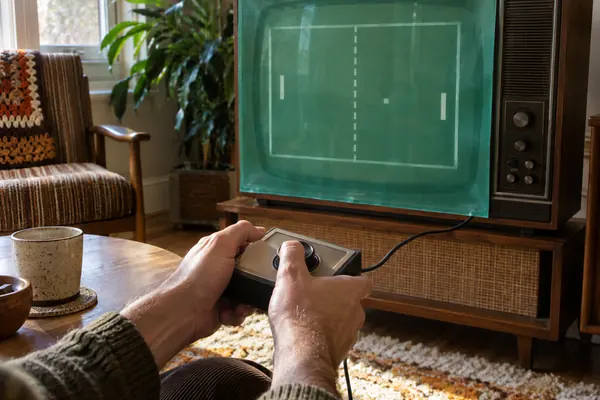
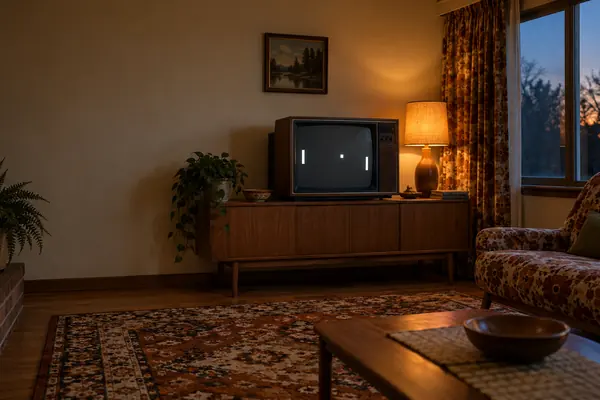
A bright dot, two paddles and a line for a net. Museum collections show how that simple bat-and-ball idea went from a laboratory open day to a box under the family television.
Pick a machine Read the short answer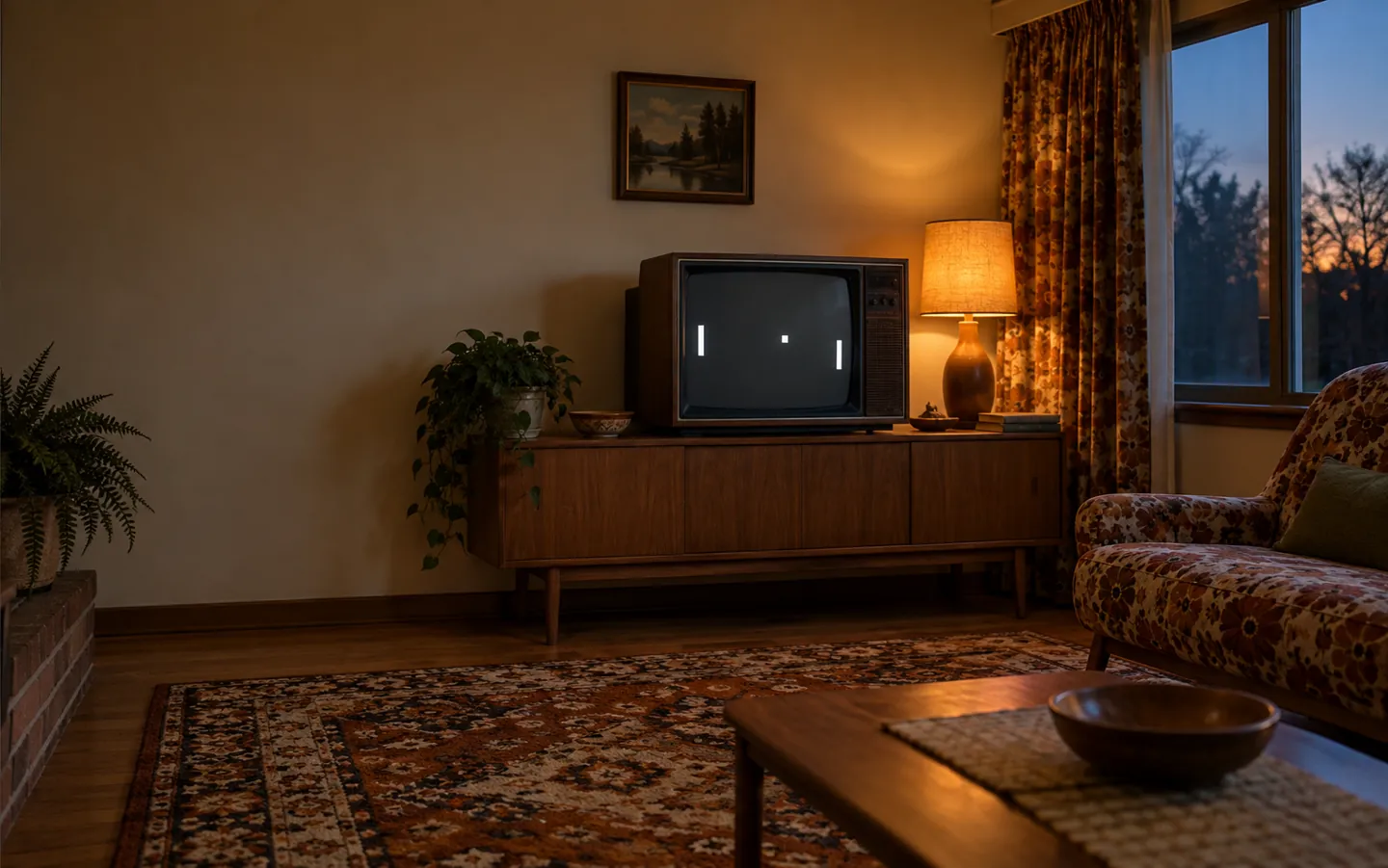
THE SHORT STORY
Three steps took table tennis onto the screen
and then into ordinary homes.
1958 · THE LAB
Brookhaven National Laboratory showed a side-on tennis court on a five-inch screen at its visitors' day. Hundreds of people lined up to play.
Meet the machines1967–68 · THE PROTOTYPE
Engineers at Sanders Associates built a TV game unit with two controls and switches to pick the game. Ping-pong was one of its games.
How it worked1972 · THE HOME
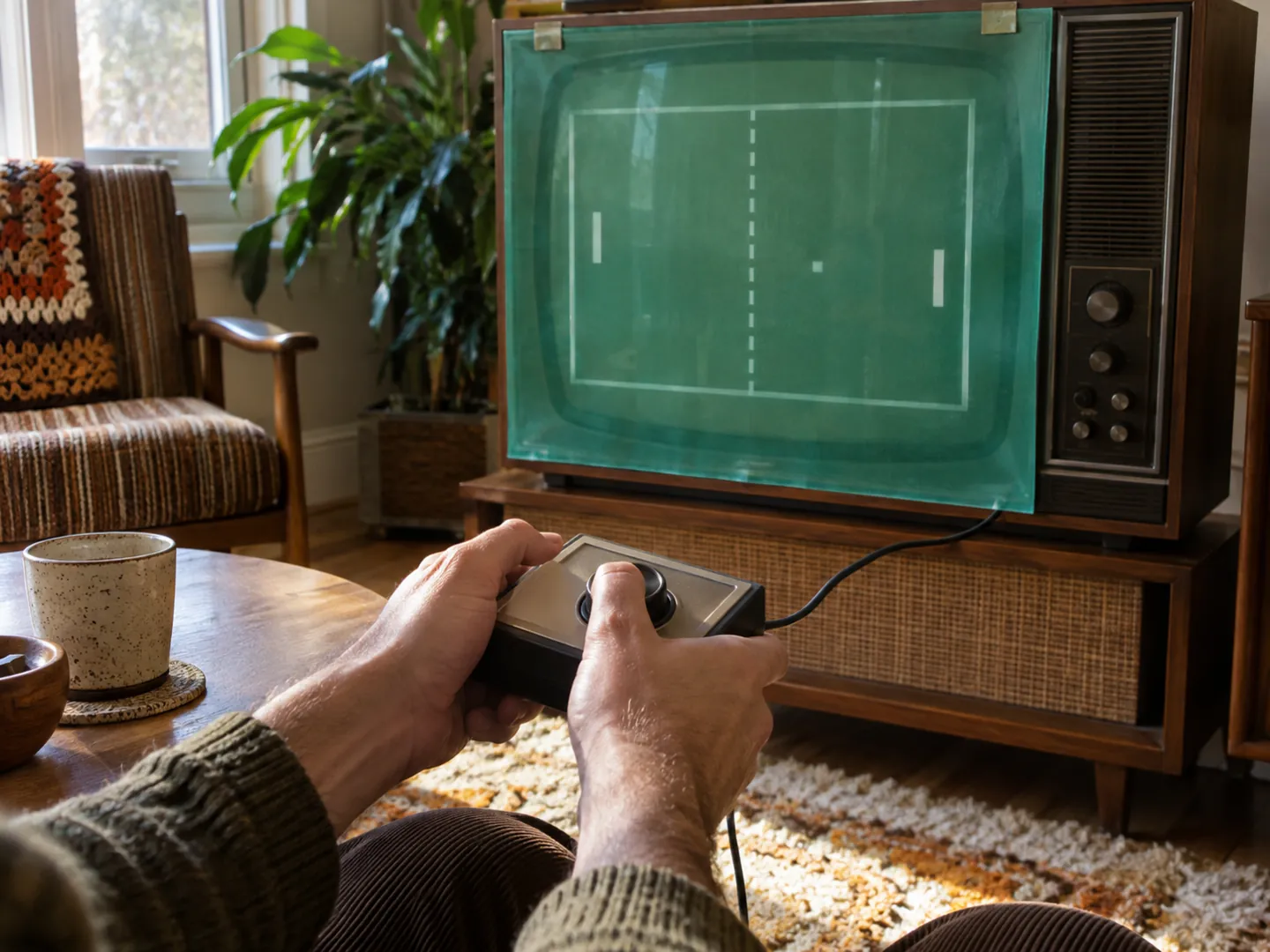
Licensed to Magnavox, the design went on sale as the Odyssey, which the Science Museum Group calls the first home games console.
See the numbersFIVE MACHINES
Pick a machine to see what it was and how many people could play it. The bar shows its reach, from a single lab to more than a million homes.
Dates and sales figures come from Brookhaven National Laboratory, the Smithsonian's National Museum of American History and the Science Museum Group.
TWO NUMBERS WORTH KNOWING
One year of home Pong,
one year of the Telstar.
HOME PONG · 1975
Units sold in its first year
150<small>,000</small>
The Smithsonian says the home version of Pong, sold with Sears, sold 150,000 units in 1975. Magnavox had taken three years to sell about 200,000 Odysseys.
COLECO TELSTAR · 1976
A Pong-style console
1m<small>+ sold</small>
The Telstar sold over one million units, according to the National Museum of American History.
Sales figures vary between collections: the Science Museum Group puts Odyssey sales at roughly 100,000 before it was discontinued in 1975, while the Smithsonian says about 200,000. Both agree it was first.
HOW THE FIRST HOME GAMES WORKED
The earliest home table tennis games were built very differently from anything we play today. Four details from museum collections show how.
WHY TABLE TENNIS?
A ball, a net and two bats need only a few moving parts. In 1958 a small analog computer could handle it: four amplifiers moved the ball and six more spotted hits on the ground or net and passed control between players.
The Smithsonian notes that in May 1972 a demonstration of the Odyssey's table tennis game was seen by one of the founders of Atari, which formed that June and released arcade Pong the same year. Atari later settled a patent suit with Magnavox, in 1975.
QUESTIONS PEOPLE ASK
Tennis for Two, shown at Brookhaven National Laboratory on 18 October 1958, drew a side view of a court on a five-inch oscilloscope screen, with a bright dot for the ball.
The Science Museum Group describes the Magnavox Odyssey, made from 1972, as the first home games console. It grew out of the Brown Box prototype of 1967–68.
It was first called TV Game Unit #7. The nickname came from brown wood-grain self-adhesive vinyl, added to make the prototype look more attractive to investors.
It did not draw colour itself. It came with plastic overlays that players stuck on the television screen to simulate colour graphics.
No. Brookhaven says any patent would have belonged to the federal government, and the game did not seem novel enough at the time to apply.
SOURCES
Each figure on this page comes from the sources below. Check them for the full detail and context.